Bienvenue à Club Petit Pierrot !
Award-winning French immersion classes for babies, toddlers and children aged 6 months to 8 years in London since 1993
Our Services
Our services


Private Tuition
During term-time and holidays, if you are unable to join a class, then we can organise lessons at home or online with one of our French teachers.
Learn more
EASTER French Holiday Camps Chelsea & Fulham
Children learn, connect and have fun during our French immersion camps
Learn more
London's longest established French immersion programme for young children, Club Petit Pierrot has been giving babies, toddlers and children aged 6 months to 8 years old Fun French Lessons since 1993. Trusted by thousands of families across London, we offer a truly unique, award-winning experience that goes far beyond a language class, welcoming francophone, francophile, bilingual and English-speaking families alike.
Total French Immersion: All lessons conducted entirely in French by native speaking teachers, allowing children to acquire the language naturally as they learnt their mother tongue.
Active Learning Programme: Carefully devised sessions making learning fun and effective. Neuroscience research confirms that children acquire language far more rapidly when learning through play and meaningful experience.
Proven Cognitive Benefits: Early bilingualism enhances brain development, critical thinking, creativity, and academic performance across all subjects.
Excellent Teachers: Caring native francophone teachers, expertly trained in the Club Petit Pierrot® methodology, with DBS check, safeguarding training and ongoing professional development.
→ Discover our full methodology
Press & Awards
2026 Club Petit Pierrot Winner of the Best Early Years Language Education Provider 2026 | Private Education Excellence Awards 2026 (LUXlife) Stella Winner of the Influential Businesswoman Award 2026 | Pioneer in language education (AI Global) 2025 AUGUST - FRANÇAIS À LONDRES - ( Article in French ) Aider Votre Enfant à Maîtriser le
 Admin
Admin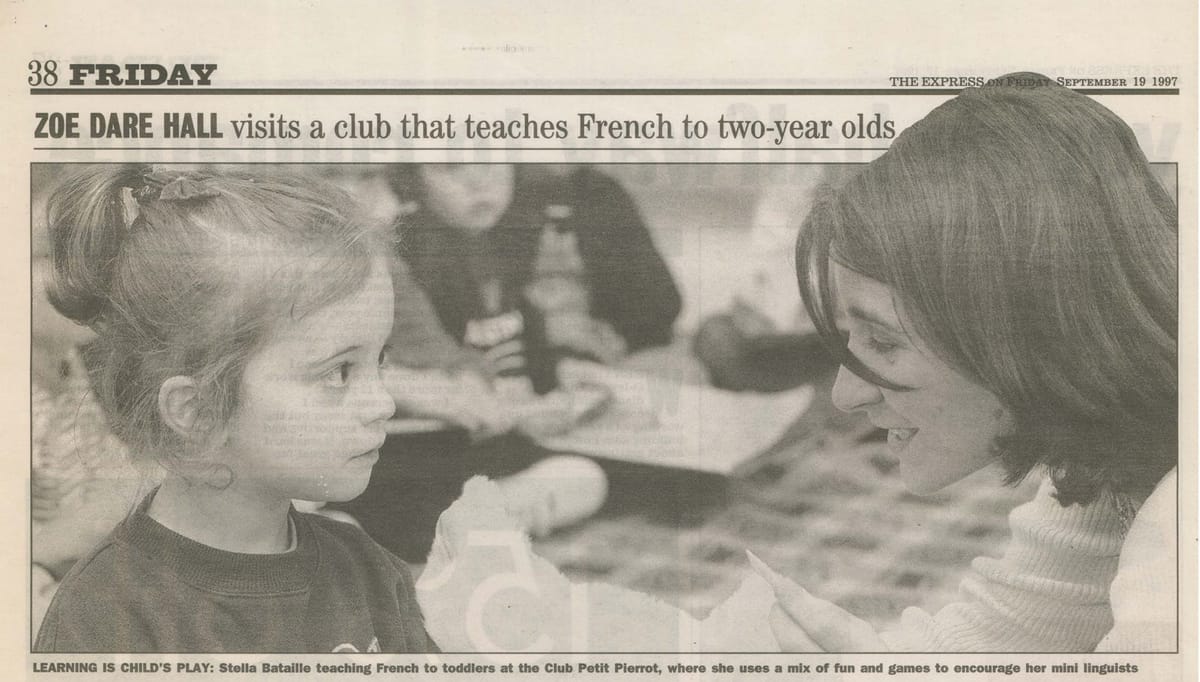
Information


SUMMER French Holiday Camps Chelsea & Fulham
Children learn, connect and have fun during our French immersion camps
Learn more

The Benefits of Learning French
Starting a second language early gives children a remarkable cognitive, cultural, and academic advantage for life.
Learn more
·
Blog
Once Upon a Time… in French!
Last weekend, we had the pleasure of hosting a storytelling session at the children’s literature Festival, the South Ken
Learn more
HOLIDAY CAMPS Overview
French holiday camps for children aged 3–8 | Fulham & Chelsea | Est. 1993
Learn more
·
Events
STORYTELLING WORKSHOP IN FRENCH - 30/03/2026
Libraire La Page, 7 Harrington Rd, South Kensington, SW7 3ES Wed 18/02
Learn more
·
Our Shop
Learn French: Original French songs & rhymes for children (MP3s only) £20
Learn French with our Music – MP3s Original French songs & rhymes for children Fun and educational songs and rhymes, totally
Learn more
Schools
Our French immersion programme is taught in nurseries and primary schools by our qualified French teachers across London. Lunchtime clubs, after-school clubs or integrated curriculum programmes available. Complete the form below and we will be in touch.
Learn more
·
Our Shop
Pierrot Puppet £20
Increase the joy of learning with our Pierrot Puppet Buy Now £20 - Delivered to youBuy Now £15 - Collect
Learn more
·
Events
SOUTH KEN KIDS FESTIVAL - 22/03/2026
If you are passionate like us about children’s literature, you will not want to miss this! Club Petit Pierrot
Learn more
·
Our Shop
Pierrot Tote Bag £12
A Charming Petit Pierrot Tote Bag, perfect for adding a touch of playful elegance to your everyday style. Made from
Learn more