Let’s keep exploring this question:
What will my child be able to do in French by the end of the year?
After sharing some realistic and age-appropriate goals for our ateliers des petits (pupils aged 6 months to 4 years), and our leçons des grands, (pupils aged 3 to 8 years) let’s now talk about our Les classes des francophones (pupils who understand French, aged 3 to 8 years).
Part 3: Les Classes des Francophones – Aligned with the official French Education National Curriculum
Different age groups: 3 to 5 – 4 to 5 – 5 to 6 – 6 to 7 – 7 to 8 years old – suitable for children who understand French
Many families are raising children in French-speaking households or bilingual environments. While children understand French they may lack the confidence to speak the language or the opportunity to develop more advanced language skills, especially in reading and writing.
That’s where our Francophone classes come in. Our goal is to deepen their knowledge of French through an age-appropriate approach focused on language structure, vocabulary, reading, and writing. All in a nurturing and pressure-free environment where children actively live and experience French culture.
Here’s what you can expect at each age group:
🎈 Ages 3–5: Structuring Spoken Language & Early Literacy Foundations
Focus: Strengthening spoken French while laying the groundwork for reading and writing.
Even if children speak or understand French at home, they may still mix languages or use simplified structures. At this age, we focus on helping them structure their speech, enrich vocabulary, and start to connect sounds to letters and meaning trough play, storytelling, fun worksheet, sensory and craft activities.
Goals and what it looks like in class :
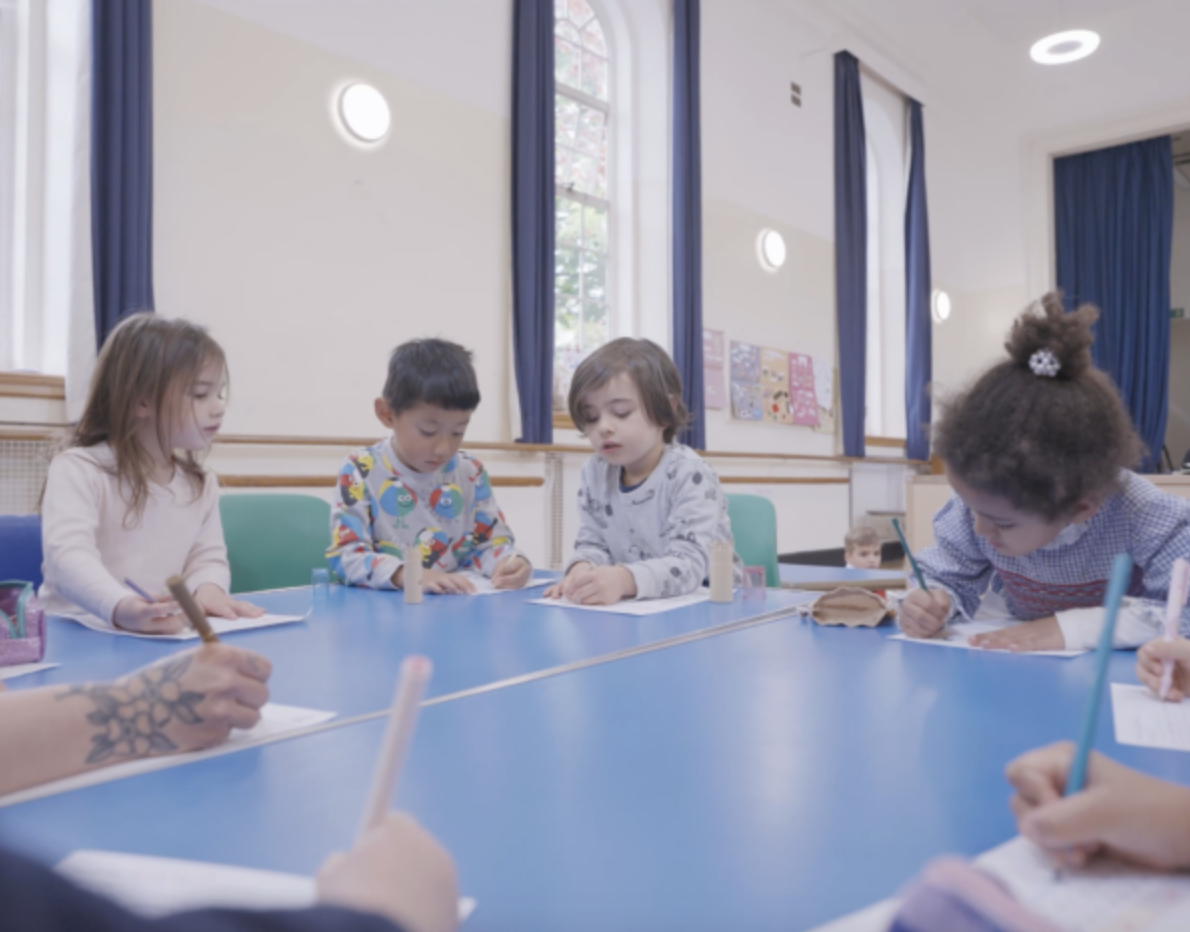
- Expand their vocabulary and speak in full sentences: we encourage our pupils to move beyond one-word answers. Every classes is an opportunity to discover a topic and to deepen their knowledge about it, using new vocabulary and more complex grammatical structures.
- Begin recognising key letter sounds and high-frequency words: these will be introduced and practise through interactive and dynamic activities like matching games, letter hunts, and rhyming or even fun worksheets.
- Tell simple stories in sequences: during storytelling, circle time, open conversations… using card, props or drawings, our mini-linguists tells stories with clear beginnings, middles and ends.
- Follow multi-step instructions in French: children practise listening and comprehension by following simple directions in French, especially while completing their worksheet or activity.
- Learning through sensory play: hands-on activities like crafts, movement games, and tactile materials support both spoken and pre-literacy skills in a playful way.
What to do at home?
- Regular storytime in French helps build listening and early literacy skills, just a few minutes a day makes a difference. Find the loveliest French books at the French bookshop Librairie La Page!
- Have fun together singing in French! Check out your child class syllabus and ask them to teach you their favorite Club Petit Pierrot song and practise together! Here are some of the songs practiced in the French speaking classes: Que va-t-on faire aujourd’hui ? – Je m’habille – Le petit train – Être – Download our 36 original French songs & rhymes here. (mp3’s files only)
- What your child brings home in their schoolbag is also a fantastic resource! Going through their activities from the week together is a great way to practise conversation skills.
🧠 Ages 6–8: Reading to Understand, Writing to Express
Focus: Building reading fluency and developing independent writing skills.
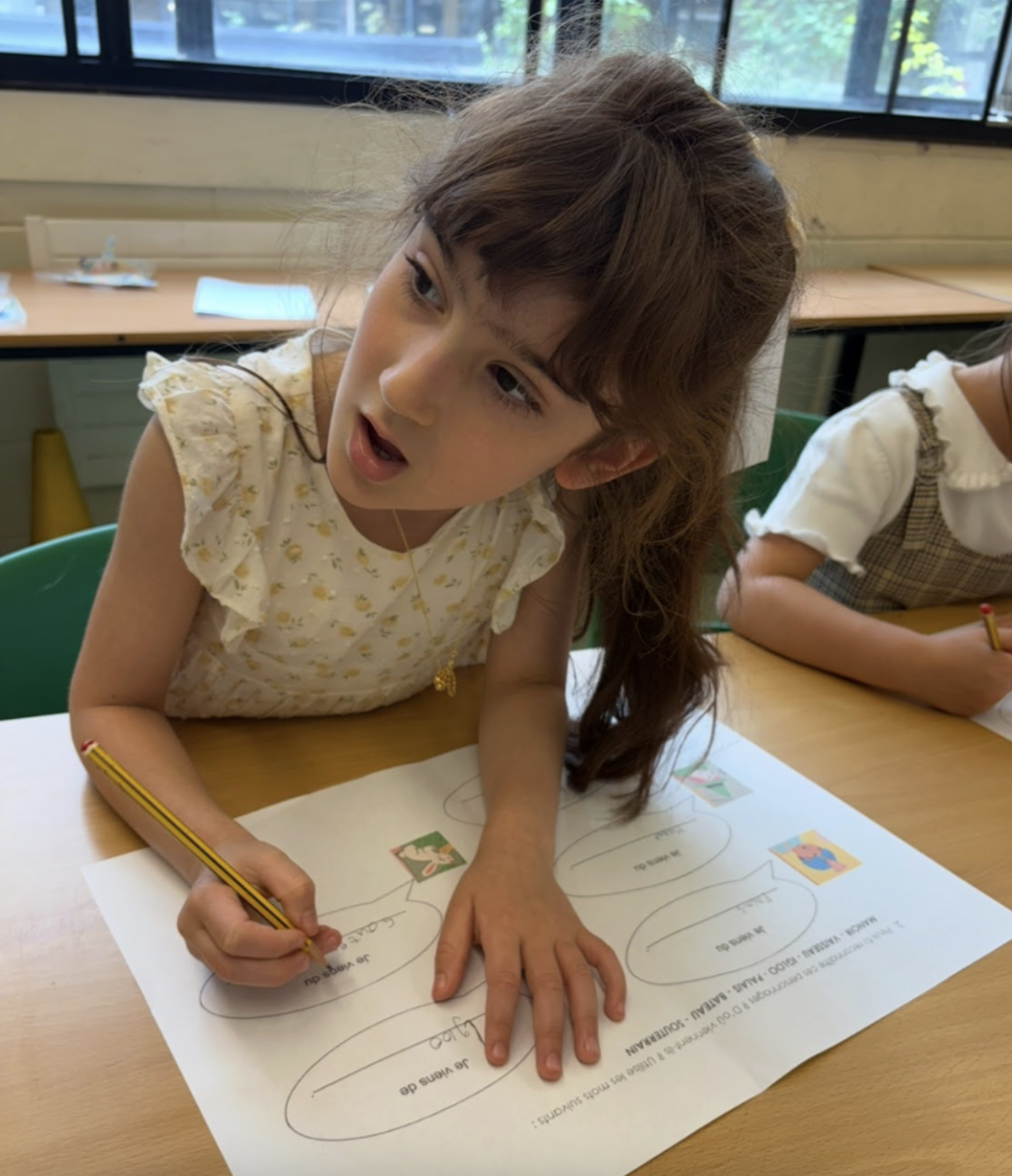
At this stage, children begin to read with more confidence and are ready to write short sentences and paragraphs. We support them in using correct grammar, learning common spelling patterns, and expressing original ideas in writing.
Goals and what it looks like in class:
- Read short texts with understanding and expression: we create opportunities for them to read out loud with attention to intonation and meaning, often supported by illustrations or role play. For example this year, they are traveling the world through the French regions (in the Metropole and over seas) reading Petit Pierrot’s postcards, discovering those places, their culture and traditions.
- Focusing on certain grammar points, conjugaison, spelling rules: children practise these skills through games and guided writing tasks, supporting their overall progress in reading, writing, and understanding French.
- Expand their vocabulary: every part of the class is an opportunity to discover new words or rephrase with a richer vocabulary.
- Start writing sentences with a proper syntax and short paragraphs: our pupils start creating sentences and short paragraphs with a clear structure: a beginning, middle, and end.
What to do at home?
- Keep practicing the songs and the poems learnt in the classroom. Here are some of the songs practiced in the French speaking classes: Je marche dans la ville – À la folie – Être – Download our 36 original French songs & rhymes here. (mp3’s files only)
- Add some French books to your bookshelf! A few times a week, or every evening, choose a French book to read and discuss together. Find the loveliest French books at the French bookshop Librairie La Page!
- Encourage your child to keep a small diary or send messages/cards in French to friends or family, it builds writing confidence in a meaningful way.
- You can also follow our YouTube Channel for additional activities in French! Have fun here!
🔄 What if My Child Mixes French and English?
That’s completely normal, and a natural part of growing up bilingual! In our classes, we give children the tools and the confidence to separate the two languages and use French correctly in different contexts.
French isn’t just a skill, it’s part of your child’s identity. Our goal is to help children not only maintain their French, but also develop pride and competence in using it fully: in writing, reading, and expressing their unique ideas.
Every child’s journey is different, but with consistent exposure, support, and joy, French can grow with them!
✨Sounds like what your child need? You can now register for Spring Term in Fulham, Chelsea & Notting Hill! 🇫🇷